
What to Look for in HIPAA Compliance Software (And Why Most Tools Fall Short)
A buyer's guide for independent practices evaluating HIPAA compliance platforms. What actually matters, what to skip, and why most tools deliver documentation exercises instead of operational security.

The compliance software market has a documentation problem
Most HIPAA compliance tools do the same thing: present a long questionnaire, generate a risk assessment report, store some policies, and call it compliance. The deliverable is a binder — digital or physical — that proves the practice went through a process.
That is not the same thing as being secure. And it is not the same thing as being prepared for an audit, a breach, or an OCR investigation.
The checklist trap
The most common failure mode in HIPAA compliance software is treating the Security Rule like a checklist rather than an operating system. A platform that asks "do you have an access control policy?" and stores the answer "yes" has documented a claim. It has not verified a control.
When evaluating platforms, the core question is: does this tool help my practice operate more securely, or does it just help me claim that I do?
What actually matters in a compliance platform
1. Continuous visibility, not annual snapshots
A risk assessment that runs once a year is stale within weeks. Staff change, vendors change, devices are added, workflows shift. The platform should track compliance readiness continuously — not generate a PDF that sits in a folder for twelve months.
Look for: live scoring, triggered reassessments when operations change, and dashboards that show whether the practice is improving or drifting.
2. Operational workflows, not just policy storage
Storing a password policy is not the same as enforcing password discipline. The platform should translate compliance requirements into daily, weekly, and monthly tasks that staff actually complete — with tracking and documentation built in.
Look for: task management tied to specific HIPAA controls, completion tracking, and reminders that keep the practice on schedule.
3. Incident response readiness
Most platforms help with prevention documentation. Very few prepare the practice for what happens when something goes wrong. Breach notification has strict timelines (60 days to HHS, 60 days to affected individuals), and practices that have never rehearsed the process will struggle under pressure.
Look for: incident response templates, breach notification guidance, and documentation that would hold up in an OCR investigation.
4. Vendor and BAA management
Business associate agreements are one of the most commonly cited gaps in HIPAA audits. The platform should help track which vendors touch PHI, whether BAAs are in place, and when they need to be reviewed.
Look for: vendor inventory, BAA tracking, and alerts when new vendor relationships need documentation.
5. Pricing that fits independent economics
Compliance platforms designed for hospital systems are often priced for organizations with dedicated compliance budgets. That pricing model does not work for a solo practitioner generating $500K in annual revenue. The platform should deliver real value at a price point that makes sense for lean operations.
Questions most vendors hope you skip
- "Can I see my compliance score right now, or only after the next assessment?"
- "What happens between assessments — does the platform track operational changes?"
- "How long would it take to produce audit-ready documentation if OCR called today?"
- "What does your platform do that a Google Sheet and a policy template cannot?"
If the answers are vague, the platform is selling documentation, not security.
How Patient Protect approaches this differently
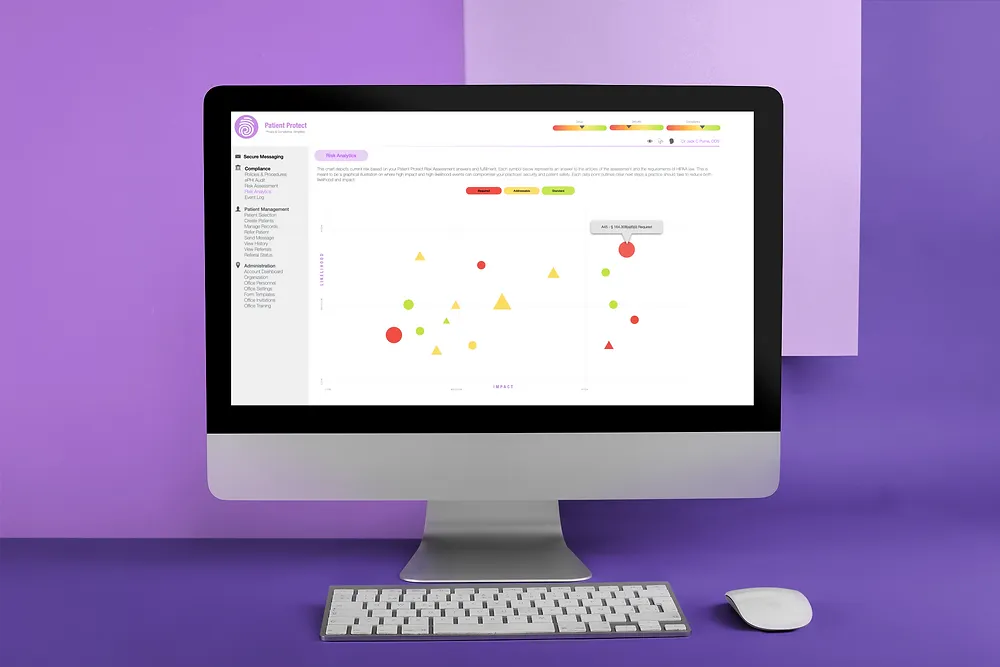
Patient Protect was built specifically for independent practices — not scaled down from an enterprise product. The platform provides daily compliance tasks, live security and compliance scoring, triggered reassessments, and audit-ready documentation that stays current as the practice evolves.
The free assessment shows where your practice stands today. The pricing comparison shows exactly what each tier includes — starting at $39/month with no contracts.
Corrections & Updates
Healthcare security data changes as investigations progress, vendors update systems, and laws and guidance evolve. If you see something outdated, incomplete, or incorrect — or have newer source material — we’d appreciate hearing from you.