Your First Hour on Patient Protect
The technical layer is running before you configure anything, and your score is still around a quarter at the end of the hour. Both of those are true, and the second one is the honest part.
How Patient Protect's modules work — features, architecture, integrations, and the reasoning behind technical choices.
10 articles
Product & Platform covers Patient Protect's compliance operating system in detail — what each module does, how it satisfies specific CFR provisions, what's automated versus what still requires practice input, and the security architecture — Zero Trust access, encryption in transit and at rest, application-layer intrusion detection — that supports the platform. These articles are for practices evaluating whether to adopt Patient Protect, current customers extending their use, and IT consultants implementing the platform on behalf of clinical clients.

The technical layer is running before you configure anything, and your score is still around a quarter at the end of the hour. Both of those are true, and the second one is the honest part.

Most compliance software was designed to pass an audit. Patient Protect was designed to survive an attack. This is a walkthrough of every architectural decision — from input validation to self-hosted AI — and why they matter for independent healthcare practices.

No system can enforce a control it does not contain. A policy requiring encrypted messaging, in a product with no messaging, is an expectation with nothing behind it. This brief names that gap and gives you a way to test any deployment for it — ours included.

Every HIPAA platform sells automation. Almost none of them say where it stops. Here is the boundary, provision by provision.

Search for 'HIPAA compliance cost' and you'll find estimates ranging from $5,000 to $150,000. Neither is particularly useful if you're an independent practitioner trying to figure out what you actually need to spend.

Independent practices carry hospital-grade HIPAA obligations with a fraction of the resources. Patient Protect made the foundation public — 15+ free tools across the six capabilities that raise the security standard, plus open data and open-source software you can cite, fork, and build on.

Software can structure a risk analysis, keep it current and retain the evidence. It cannot perform it for you, and no product makes a practice compliant. How to tell the difference while evaluating one.

The biggest opportunity in healthcare is not another EHR or telehealth platform. It is the $164 billion in unfunded compliance and security infrastructure that independent providers cannot afford to ignore.

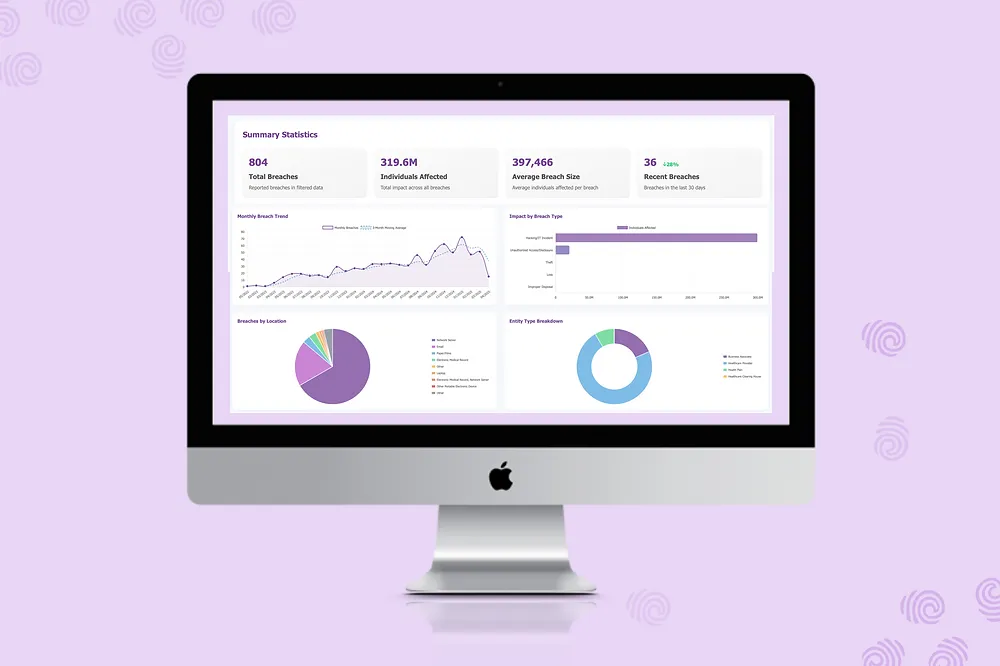
The breach dashboard gives every healthcare provider — regardless of size — access to HHS breach data, trend analysis and geographic risk mapping, refreshed daily.

A HIPAA compliance vendor running jQuery 1.x and unpatched dependencies is not protecting your practice. It is introducing risk you cannot see.
Related references